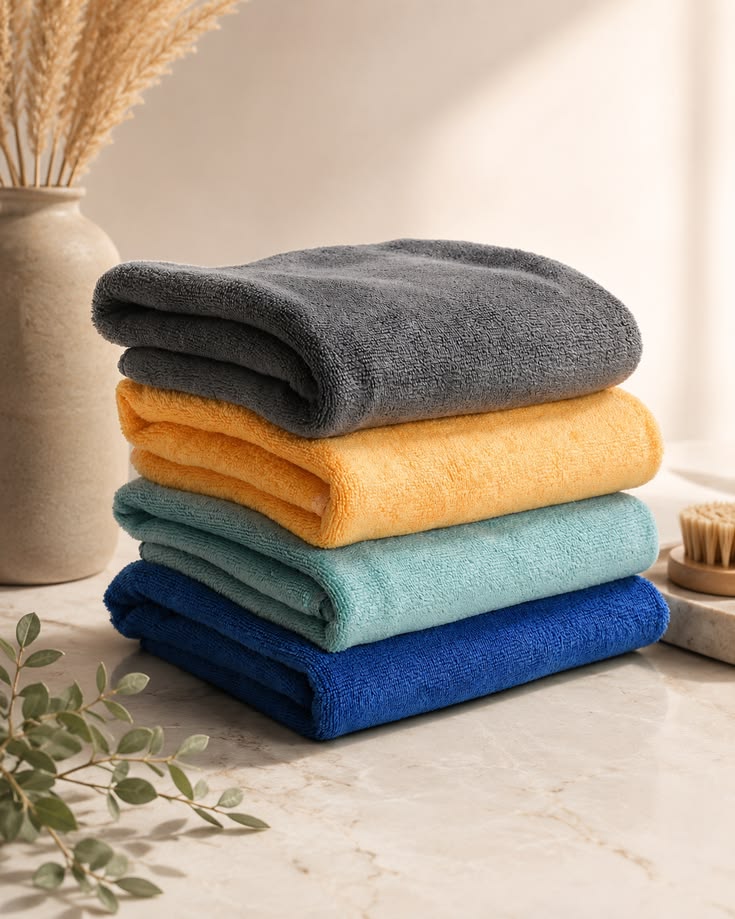
The Microfiber Revolution: The Ultimate Family-Safe & Eco-Friendly Cleaning Guide
For young families, condo dwellers, and pet owners, keeping a home pristine often feels like choosing between two bad options: harsh chemical sprays or endless rolls of single-use paper towels. High-performance split microfiber towels eliminate this dilemma entirely.
When manufactured and used correctly, quality microfiber removes up to 99% of bacteria from non-porous surfaces using plain water alone. By replacing toxic disinfectant sprays and disposable wipes with reusable microfiber, you create a safer environment for crawling infants and pets while drastically reducing household waste.
The Science of Microfiber: How Split Fibers Trap Micro-Dirt
Standard cotton towels push dirt and liquid across surfaces, creating a thin smeared layer of bacteria. Microfiber operates on a microscopic, mechanical level.
1. Fiber Thickness & Split Technology
A single strand of microfiber is 1/100th the diameter of a human hair (under 1 denier). Premium cleaning microfiber undergoes a chemical splitting process that transforms round synthetic strands into multi-channeled, star-shaped fibers.
Capillary Action: The microscopic spaces between split wedge channels pull liquids and fine particulates upward like mini-syringes.
Electrostatic Charge: During dry dusting, polyester fibers generate a natural positive electrostatic charge that attracts and locks negatively charged dust, pet dander, and pollen.
2. Fiber Composition Ratio
Look at the label on microfiber towels before buying. The ratio of Polyester to Polyamide dictates performance:
80/20 Blend (80% Polyester / 20% Polyamide): Ideal for general dusting, utility wiping, and glass. High durability at lower cost.
70/30 Blend (70% Polyester / 30% Polyamide): Premium grade. Polyamide provides water absorption and softness. Highly recommended for baby high chairs, delicate condo countertops, and pet drying.
GSM & Weave Selection Guide for Household Tasks
Not all microfiber cloths are built the same. GSM (Grams per Square Meter) measures fabric density and weight—matching the right GSM and weave to the surface prevents scratches and speeds up cleaning time.
| Weave Type | Target GSM Range | Primary Household Function | Family & Pet Advantage |
|---|---|---|---|
| Flat Glass / Fishscale Weave | 200 – 300 GSM | Mirrors, glass shower doors, condo balcony windows | Zero linting; eliminates streak marks on glass without chemical sprays. |
| Plush Terry Weave | 300 – 400 GSM | All-purpose dusting, counter wiping, baby play mats | Holds high moisture; grabs fine pet hair and crumbs off textured play mats. |
| Waffle Weave | 350 – 500 GSM | Kitchen dish drying, large spill cleanup, bath drying | Deep pockets absorb up to 7× its weight in liquid; rapid drying resists mildew smell. |
| High-Pile Ultra Plush | 500 – 800 GSM | Pet paw wiping, delicate furniture polishing | Gentle on pet paws; absorbs heavy outdoor mud and moisture quickly. |
The 8-Zone Folding Technique: Maximum Coverage & Zero Contamination
Most people wad up a cleaning cloth into a ball, which wastes 80% of the surface area and recirculates trapped dirt back onto clean surfaces. The 8-Zone Fold provides eight fresh, flat cleaning quadrants from a single towel.
Color-Coding System: Hygiene & Safety Protocols
Preventing cross-contamination is critical in homes with infants and pets. You must never use the same cloth on the bathroom toilet rim that you use on baby high-chair feeding trays or kitchen counters.
Standard Family Color Key
Green Towels: Kitchen countertops, dining tables, food prep areas, and baby high chairs.
Yellow Towels: General living room dusting, wooden furniture, play shelves, and toys.
Blue Towels: Glass balcony doors, bathroom mirrors, windows, and polished fixtures.
Red / Pink Towels: High-germ bathroom zones ONLY (toilet bowl exterior, sink basin, floor drain).
Orange / Purple Towels: Pet zone ONLY (wiping muddy paws, cleaning food bowls, crate trays).
Microfiber Care & Laundry Rules: Preserving Fiber Longevity
Microfiber cloths can be washed and reused up to 500 times if washed properly. Incorrect laundering melts the microscopic synthetic hooks and fills split channels with wax, rendering them useless.
The 3 Cardinal Sins of Washing Microfiber
1. NO Fabric Softeners or Dryer Sheets: Fabric softeners deposit a thin coat of silicone/oil over the fibers. This clogs the microscopic split channels, permanently destroying their absorbency and static charge.
2. NO Chlorine Bleach: Bleach degrades the synthetic nylon (polyamide) and polyester matrix, causing fibers to disintegrate and shed.
3. NO High Heat: Microfiber is plastic (polyester/polyamide). Drying on high heat melts the microscopic fiber tips together, turning soft cloths into hard, scratchy rags.
Eco-Friendly Restoration Routine for Clogged Towels
If towels accidentally absorb fabric softener or oil, restore them with a vinegar boil:
Submerge stiff microfiber towels in a stainless steel pot filled with water and 1 cup distilled white vinegar.
Bring to a gentle simmer for 10 minutes to melt and dissolve clogged waxes.
Rinse thoroughly in cold water and air-dry flat.
Microfiber Maintenance Summary for Busy Homes
| Routine Activity | Method & Eco-Tip | Benefit for Family & Pets |
|---|---|---|
| Daily Dry Dusting | Use dry 300 GSM plush microfiber on furniture & TV stands. | Traps pet dander statically without aerosolized furniture polish. |
| Daily Kitchen Cleanup | Dampen green microfiber with plain warm water for high chairs. | Removes dried food without leaving toxic soap residue. |
| Weekly Laundry Wash | Wash microfiber together only (separate from lint-producing cotton). | Prevents cotton lint from filling microfiber wedge channels. |
| Eco Environmental Tip | Wash cloths inside a fine mesh washing bag (e.g., Guppyfriend). | Catches microplastic synthetic shed before wash water enters oceans. |