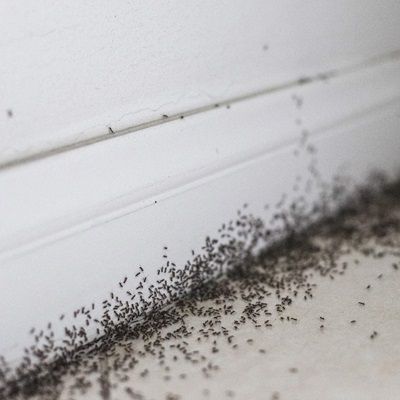
Pest Prevention & Home Hygiene: Defeating Tropical Ant Invasions
In tropical environments like Malaysia, year-round warmth (28°C–34°C) and elevated humidity levels create a non-stop breeding cycle for household ants. Heavy equatorial downpours frequently flood subterranean and tree nests, forcing millions of ants to migrate indoors seeking dry shelter, water, and food.
Squashing individual ants or spraying visible worker trails provides only temporary relief. Ants communicate via chemical hydrocarbon markers known as trail pheromones. When a scout ant finds a food source, it lays a invisible scent line back to the nest.
Crucial Reality: Eliminating 20 visible worker ants on your countertop does zero damage to a nest housing over 50,000 workers and multiple fertile queens hidden inside your wall voids or electrical trunking.
1. Common Household Ant Species in Malaysia
Identifying the ant species invading your home is essential because food preferences (sugar vs. protein) and nesting habits dictate the exact baiting strategy required.
Ghost Ant (Tapinoma melanocephalum) — Semut Mayat
Appearance: Tiny (~1.5 mm long) with a dark head and translucent, milky-white legs and abdomen.
Nesting Habitat: Wall cavities, behind kitchen backsplashes, inside potted plant soil, and within electrical junction boxes.
Behavior: Moves rapidly and erratically. When crushed, they release a distinctive odor resembling decaying coconuts. They feed primarily on sugary liquids, honeydew, and grease.
Pharaoh Ant (Monomorium pharaonis) — Semut Api Kecil
Appearance: Minute (1.5 mm to 2 mm), light yellow to reddish-brown with a darker abdomen.
Nesting Habitat: Deep structural voids, air-conditioning trunking, warm water pipes, and condo riser shafts.
Behavior: Highly dangerous in high-rise buildings due to polygyny (multiple queens per nest) and budding. If threatened by insecticide sprays, a single colony splits into multiple sub-colonies that scatter across neighboring units.
Black Crazy Ant (Paratrechina longicornis) — Semut Gila
Appearance: Medium-sized (2.3 mm to 3 mm), dark brown to black with unusually long legs and antennae.
Nesting Habitat: Under loose tile grout, beneath floor mats, inside garbage bin bases, and inside electrical appliance housings.
Behavior: Runs frantically in non-linear, unpredictable zig-zag patterns. They are strongly attracted to electromagnetic fields in appliances and consume both sweet items and protein/grease.
Asian Weaver Ant (Oecophylla smaragdina) — Semut Rangrang
Appearance: Large (8 mm to 10 mm), bright reddish-orange with strong mandibles.
Nesting Habitat: Outdoors on trees, garden shrubs, and balcony foliage, building woven leaf nests.
Behavior: Highly aggressive territorial defenders. While they rarely nest indoors, they invade balconies and open doors, delivering painful bites sprayed with formic acid.
Tropical Fire Ant (Solenopsis geminata) — Semut Api
Appearance: Reddish-brown to black, ranging from 3 mm to 6 mm in length with large, square heads on major workers.
Nesting Habitat: Soil mounds near sliding glass doors, driveway cracks, and flower beds.
Behavior: Aggressive stingers that inject painful venom containing solenopsin, causing burning sensation and localized pustules on human skin.
2. The Critical Spraying Mistake: Aerosols vs. "Budding"
The most common mistake homeowners make when encountering an ant trail is using aerosol sprays (Baygon, Shieldtox, or general surface sprays).
- Aerosol Spray Applied
- Kills 2% of colony (Visible Foraging Workers)
- Repellent Chemical Detected by Nest
- Triggers Emergency Alarm Pheromones
- COLONY BUDDING: Queens split with worker clusters
- Result: 1 Central Nest becomes 4-5 Sub-Nests in other rooms!
The Repellency Trap: Aerosols contain fast-acting synthetic pyrethroids. They instantly kill the 2% of workers out foraging, but act as a chemical barrier that alerts the remaining 98% of the colony hidden inside wall cavities.
Induced "Budding": Species like Pharaoh ants and Ghost ants react to pyrethroid threats by budding. Queens take groups of workers and brood to establish new sub-colonies in bedrooms, living rooms, and bathrooms.
Queen Replacement Surge: The loss of foragers triggers alarm pheromones (undecane), prompting the queen to increase egg production, rapidly expanding the population within weeks.
3. The Science of Eradication: Baiting Protocol
To destroy an entire ant colony, you must utilize their social feeding mechanism called trophallaxis—the regurgitation and sharing of food from worker to larvae, other workers, and the queen.
Ant nutritional needs shift based on egg production cycles. Place two tiny test drops 10 cm apart near their trail:
Sugar Test: A drop of honey, condensed milk, or sugar water.
Protein/Grease Test: A dab of peanut butter, mayonnaise, or cooking oil.
Observe which food item attracts the highest concentration of ants within 20 minutes to choose the correct bait formula.
Purchase commercial gel baits containing slow-acting non-repellent active ingredients like Indoxacarb, Fipronil, or Boric Acid/Borax.
Why Slow-Acting Matters: Fast poisons kill the worker before it reaches the nest. A slow-acting toxin allows the worker ant 24 to 48 hours to return to the colony and feed the queen via trophallaxis.
Apply small, pea-sized dabs of gel bait directly adjacent to observed ant trails—never directly on top of the trail (which disrupts their path).
Place bait along wall skirtings, behind kitchen sinks, around water heater pipes, and near electrical outlet covers.
Resist the urge to wipe away or crush ants crowding the bait station.
You should see ant traffic increase significantly over the first 24 to 36 hours.
Replenish consumed gel daily until traffic drops to zero (typically within 3 to 7 days, signifying total colony collapse).
4. Room-by-Room Ant Defense & Prevention
Different rooms present unique attractants in a tropical home environment.
Kitchen & Pantry (The Primary Target)
Airtight Glass/PBT Storage: Standard plastic bags, bread clips, and cardboard boxes are easily breached by ants. Transfer sugar, rice, cereal, and flour into glass jars or heavy BPA-free containers featuring silicone airtight gaskets.
The Moat Technique: Place honey jars or pet food bowls inside shallow saucers filled with water and a drop of dish soap (which breaks surface tension, preventing ants from floating across).
Coffee Machine & Kettle Maintenance: Clean residual coffee drips and empty water reservoirs nightly. Ghost ants regularly nest inside the warm motor blocks and water lines of espresso machines.
Living Room & Home Office (Crazy Ant Hotspots)
Circuit Board Protection: Black Crazy Ants are notorious for entering TV housings, Wi-Fi routers, power strips, and laptop keyboards. Their bodies cause short-circuits, which release distress scents that attract hundreds more.
Puff Desiccant Dust: Apply food-grade Diatomaceous Earth (DE) or Boric Acid powder into wall crevices behind entertainment units using a bulb duster.
Bathroom & Wet Kitchen (Water Sources)
Eliminate Soap Scum: Ants chew on organic residues left in soap dishes, bath mats, and shampoo bottle caps. Wash bathroom trays weekly with hot soapy water.
Seal Tile Grout Gaps: Water seeping behind cracked floor tiles creates ideal moist breeding sites for Pharaoh ants. Re-grout loose bathroom tiles immediately.
Balconies & Garden Doors (Sucking Pest Mutualism)
Control Aphids & Mealybugs: Ants maintain a symbiotic relationship with plant-sucking insects like aphids, scale insects, and mealybugs. Ants protect these pests from natural predators in exchange for sugary honeydew.
Prune Overhanging Branches: Ensure tree branches, potted plant leaves, and garden vines do not physically touch exterior walls, window frames, or balcony railings, eliminating natural bridge access into your home.
5. Natural Repellents vs. Chemical Controls
While natural solutions rarely eradicate established nests, they serve as non-toxic perimeter deterrents to block new ants from entering.
| Method | Type | Mechanism of Action | Longevity | Ideal Scenario |
|---|---|---|---|---|
| Commercial Gel Baits (Indoxacarb / Fipronil) | Chemical Toxicant | Ingested slow-acting stomach/nerve poison passed via trophallaxis. | 1 to 2 weeks (until consumed) | Complete nest & queen eradication indoors. |
| White Vinegar & Water Solution (1:1) | Natural Disruptor | Acetic acid strips away invisible hydrocarbon pheromone trails. | 12 to 24 hours | Wiping down kitchen countertops after baiting is complete. |
| Cinnamon Powder & Essential Oil | Natural Barrier | Cinnamaldehyde irritates ant olfactory receptors, creating a physical barrier. | 3 to 5 days | Dusting across sliding balcony door tracks and window sills. |
| Diatomaceous Earth (DE - Food Grade) | Mechanical Desiccant | Microscopic silica particles scratch the waxy cuticular layer of the exoskeleton, causing fatal dehydration. | Indefinite (if kept completely dry) | Puffing into dry wall voids, electrical trunking, and under cabinets. |
| Boric Acid & Sugar Paste (1:9 Ratio) | DIY Bait | Borate ions disrupt stomach metabolic enzymes and abrade insect digestive tracts. | 3 to 5 days (dries out quickly) | Cost-effective DIY baiting for large, non-Pharaoh outdoor ant species. |
6. Preventive Maintenance Schedule
Maintaining ant-free living conditions in tropical climates requires recurring daily habits and structural checks.
- Daily Tasks
- Wipe kitchen counters with a 1:1 water and vinegar solution after cooking.
- Wash pet food bowls immediately after feeding or maintain a water moat.
- Take out wet food garbage to exterior bins before sleeping.
- Weekly Tasks
- Vacuum under sofa cushions, rug edges, and electrical cable clusters.
- Inspect under-sink drainage pipes for minor water leaks or condensation.
- Scrub grease accumulation off cooker hoods and backsplash tiles.
- Monthly Tasks
- Inspect sliding balcony doors and replace worn rubber door sweeps.
- Treat balcony potted plants with neem oil to eliminate honeydew-producing aphids.
- Re-apply Diatomaceous Earth powder inside dark utility cupboards and wall voids.