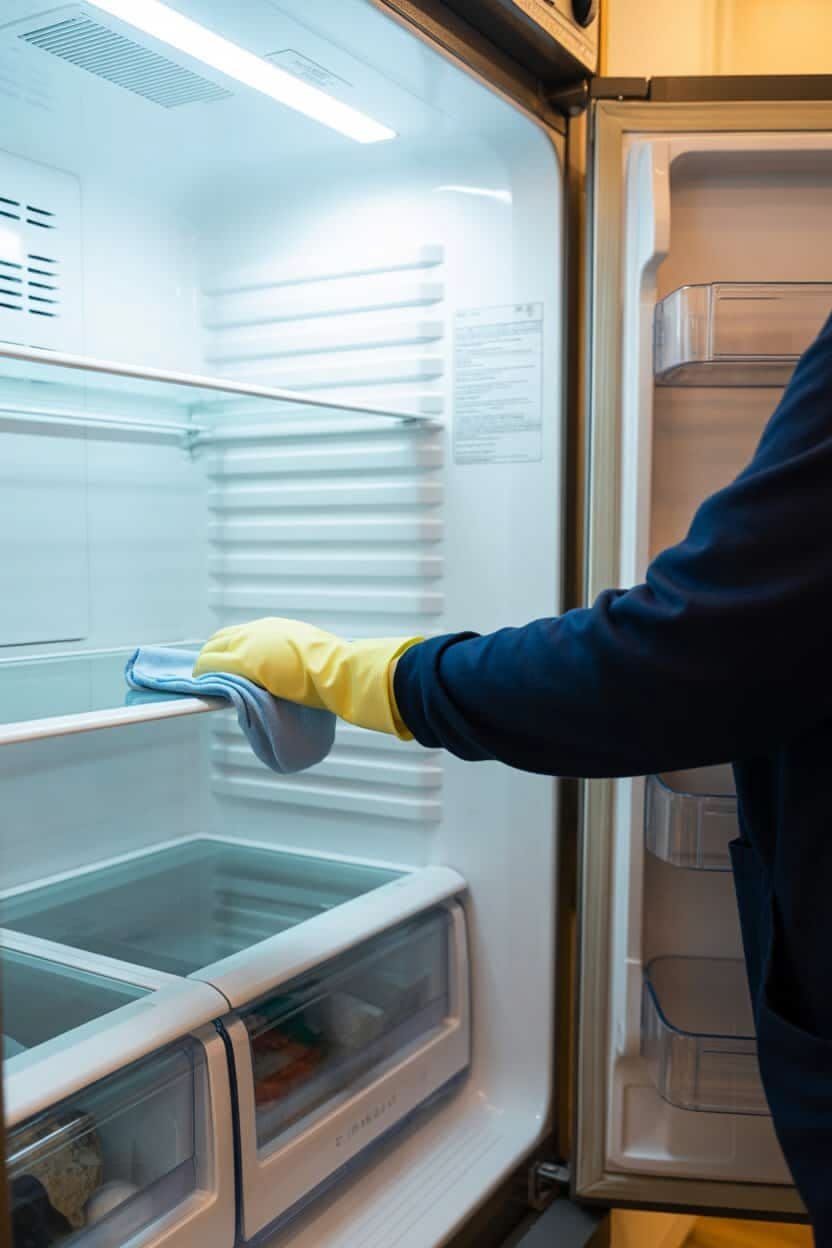
In Malaysian homes, the kitchen refrigerator is the hardest-working appliance in the house. Running 24 hours a day, 365 days a year, it operates under extreme ambient conditions: kitchen temperatures frequently exceeding 32°C during daytime cooking and indoor relative humidity averaging 75% to 90%.
When humid tropical air enters a cold refrigerator during frequent door openings, moisture condenses instantly. Combined with hot kitchen environments, high moisture causes compressor fatigue, black mold growth along rubber door seals, internal water puddles under vegetable drawers, and rapid food spoilage.
Without systematic maintenance, your refrigerator consumes significantly more electricity on your monthly Tenaga Nasional Berhad (TNB) utility bill while risking sudden breakdown or food contamination.
Section 1: The Humidity Battle — Door Seals & Internal Drain Lines
1. Refrigerator Door Gasket (Rubber Seal) Defense
The magnetic rubber gasket lining your refrigerator door keeps cold air trapped inside. In humid tropical environments, cooking oil vapor, airborne dust, and moisture collect inside the flexible pleats of the rubber seal, turning it into a prime breeding zone for black mold (Aspergillus).
The Paper / Dollar Bill Test: Open the door, insert a piece of paper or a RM5 note halfway across the rubber seal, and close the door. Pull the paper out gently. If it slides out easily without friction, your magnetic seal has lost compression, allowing cold air to leak and forcing the compressor to run continuously.
Cleaning Moldy Rubber Seals: Avoid concentrated bleach or petroleum solvents, which harden and crack synthetic rubber over time. Instead, scrub the pleats using a soft toothbrush dipped in a solution of 1 cup warm water, 1 teaspoon mild dish soap, and 1 tablespoon baking soda.
Conditioning the Rubber: After cleaning and drying the seal, apply a micro-thin layer of petroleum jelly (Vaseline) or silicone grease along the rubber folds. This restores elasticity and ensures an airtight seal.
2. Clearing the Internal Defrost Drain Hole
If you notice water pooling under the bottom vegetable crisper drawer or leaking onto your kitchen floor, the culprit is almost always a clogged defrost drain hole. During automated defrost cycles, melted frost drains down a channel at the back inside wall of the fridge. Food crumbs, chilli seeds, and bacterial slime often block this tiny opening.
Section 2: Compressor Care, Condenser Coils & Pest Defense
1. Cleaning Dusty Condenser Coils
The condenser coils (located either exposed on the rear panel or hidden beneath the bottom skirt) dissipate heat removed from inside the fridge. In Malaysian households, floating dust, pet hair, and lint coat these warm metal coils, forming an insulating blanket.
When coils cannot release heat efficiently, internal cabinet temperatures rise, compressor runtime increases by up to 40%, and electricity consumption spikes significantly.
How to De-Dust Coils:
Pull the refrigerator away from the wall and unplug the power cord.
Use a stiff coil cleaning brush or narrow vacuum crevice attachment to remove dust webs from the black metal grid.
If your fridge has a bottom kick-plate, snap off the front grille and vacuum the wire coils under the base.
Maintain at least 10 cm (4 inches) of open clearance between the back of the refrigerator and the kitchen wall to ensure adequate heat dissipation.
2. Evaporator Drip Tray & Pest Management
Unattended standing water in the rear compressor drip pan creates two major issues in tropical kitchens: mosquito breeding and pest attraction (ants and German cockroaches).
Drip Tray Sanitization: Pull out or access the rear plastic drain pan sitting atop the hot compressor motor every 3 months. Wash away stagnant water, sludge, and algae using warm soapy water mixed with white vinegar.
Pest Barrier Installation: German cockroaches love the warm, dark cavity surrounding the compressor PCB board. Place gel cockroach bait or boric acid powder around the rear bottom chassis—never spray liquid chemical insecticides near hot electrical wires or fan motors.
Section 3: Ideal Temperature Calibration & Shelf Storage Architecture
Improper temperature settings lead to premature food spoilage, frozen vegetables, or excessive frost buildup on cooling vents.
Recommended Temperature Benchmark
Fresh Food Compartment: Set to 3°C to 4°C (37°F to 39°F). Temperatures above 4°C allow rapid bacterial growth on fresh meat and cooked rice.
Freezer Compartment: Set to -18°C (0°F).
Zoned Storage Architecture for Tropical Kitchens
| Refrigerator Zone | Temperature Range | Heading 3 | Storage Rules & Best Practices |
|---|---|---|---|
| Top Shelves | 3°C – 4°C (Most Stable) | Cooked leftovers, ready-to-eat foods, sambal jars, drinks | Store cooked curries in airtight glass containers to prevent plastic staining and odor transfer. |
| Middle Shelves | 2°C – 3°C | Dairy, tofu, pasteurized milk, fresh noodles | Keep items slightly spaced apart; do not block rear cold air discharge vents. |
| Bottom Shelf (Coldest) | 1°C – 2°C | Raw poultry, fresh fish, seafood from wet markets | Place raw meat in leak-proof trays on the lowest shelf so dripping juices cannot contaminate other food. |
| Crisper Drawer (High Humidity) | 4°C – 6°C | Leafy local greens (sawi, kangkung, bayam), herbs | Adjust slider vent to High Humidity (Closed) to retain moisture and prevent leaf wilting. |
| Crisper Drawer (Low Humidity) | 4°C – 6°C | Fruits, melons, peppers, cucumbers | Adjust slider vent to Low Humidity (Open) so ethylene gases escape, preventing soft rot. |
| Door Racks (Warmest Zone) | 5°C – 8°C | Condiments, chili sauce, soy sauce, canned drinks | Do NOT store fresh fresh milk or raw eggs in door racks. Temperature fluctuates every time the door opens. |
Section 4: Deodorization — Neutralizing Strong Odors (Bau Sambal & Durian)
Malaysian cuisine relies on aromatic ingredients like belacan, garlic, sambal, dry salted fish, and tropical fruits like durian. Odor molecules absorb into porous plastic interior cabinet walls, lingering long after the food is gone.
1. Natural Absorbers vs. Masking Agents
Activated Charcoal (Recommended): Place a mesh bag of activated charcoal on the middle shelf. Charcoal porous structure physically binds volatile organic compounds without imparting artificial perfume to fresh ice cubes.
Baking Soda Box: Keep an open box of sodium bicarbonate on the top shelf to absorb acidic cooking smells. Replace every 3 months.
The Pandan Leaf Myth: Tying fresh pandan leaves inside the fridge adds a pleasant scent, but it does not absorb smell molecules. Old pandan leaves wilt, retain moisture, and can rot, adding to mold risks.
2. Deep-Cleaning Spills & Stains
Turmeric & Chili Oil Stains: Make a paste of baking soda and 3% hydrogen peroxide. Apply to yellowed plastic shelf tracks, let sit for 15 minutes, and wipe clean with a microfiber cloth.
Smelly Spill Wash: Wipe cabinet interiors using 1 part white vinegar mixed with 2 parts warm water.
Section 5: Long Vacation (Balik Kampung) & Monsoon Power Outage Protocols
Leaving a refrigerator unmanaged during extended festive trips (Raya, CNY, Deepavali) or handling prolonged monsoon power disruptions requires preventive planning.
The "Balik Kampung" Checklist (Trips Longer Than 7 Days)
Clear Perishables: Consume or dispose of all short-shelf-life items (unopened milk, fresh leafy vegetables, raw seafood).
Consolidate & Freeze: Group remaining frozen items tightly together in the freezer compartment—solid frozen blocks retain cold longer during power blips.
The Coin-on-Ice Test: Freeze a small cup of water, then place a coin on top of the ice. If you return home and find the coin sank to the bottom of the cup, a prolonged power failure occurred while you were away, defrosting and refreezing your food. Discard all meat and dairy immediately.
If Turning Off Appliance: If turning off the fridge completely while away, leave both cabinet doors propped open. Closing the doors on an unpowered, damp fridge in tropical heat guarantees a thick coat of black mold within 72 hours.
Refrigerator Maintenance Schedule
| Frequency | Maintenance Zone | Action Item |
|---|---|---|
| Weekly | Internal Inventory | Wipe fresh spills; purge expired leftovers; check vegetable crisper for rotting produce. |
| Monthly | Rubber Door Gaskets | Wipe pleats with warm soapy water; test seal tightness with paper test; apply Vaseline if dry. |
| Quarterly | Drain Hole & Drip Tray | Flush internal defrost drain hole with hot baking soda solution; wash rear compressor drip tray. |
| Bi-Annually | Condenser Coils & Rear | Pull unit out, vacuum rear wire coils, clear dust kick-plate, and check pest bait stations. |
| Annually | Comprehensive Deep Clean | Defrost freezer, wash all removable glass shelves with dish soap, and replace activated charcoal absorbers. |