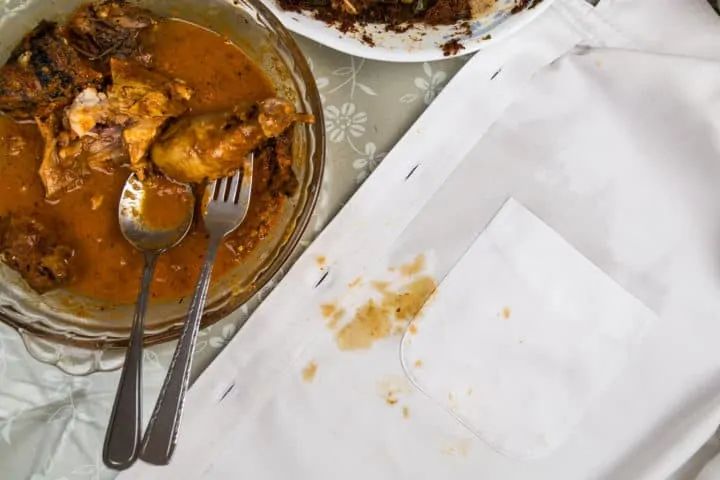
Emergency Sambal & Curry Stain Removal: Saving Clothes, Countertops & Tupperware
Sambal, curry, and rendang are the heart of Malaysian cuisine, but a single drop on a white shirt, quartz countertop, or plastic container can cause instant panic. The combination of bright yellow turmeric (kunyit), red chili oil (cili kisar), and rich coconut milk (santan) creates one of the most stubborn natural dye combinations in existence.
In this guide, we break down the chemical science of curry stains and provide fast, proven protocols for removing them from clothing, kitchen surfaces, plasticware, and upholstery.
The Science: Why Sambal & Curry Stains Are So Stubborn
Understanding what makes curry stains stick is the key to removing them without damaging your belongings.
Turmeric (Curcumin): The active pigment in turmeric is curcumin. It is a natural hydrophobic (water-repelling) dye. Water alone will never dissolve curcumin; it requires surfactants (soaps) or solvents (alcohol) to break down.
Chilli Oil & Coconut Milk (Santan): The lipids in cooking oil and santan act as a binder. The grease seals the yellow and red pigments into fabric pores or microscopic grooves in countertops and plastic.
UV Sensitivity: Curcumin's hidden weakness is that it is highly sensitive to ultraviolet (UV) light. Direct sunlight photodegrades (breaks down) the curcumin molecule, causing yellow stains to fade naturally.
The 60-Second Emergency Response Protocol
When a spill occurs, your immediate actions dictate whether the stain becomes permanent.
CRITICAL RULE: Never rub a fresh curry stain! Rubbing forces oil and turmeric deeper into fabric fibers and porous stone surfaces.
FRESH STAIN EMERGENCY SEQUENCE
Step 1: Blot, Don't Rub. Take a dry paper towel or clean cloth and gently press straight down onto the spill to lift excess liquid and grease.
Step 2: Absorb the Free Oil. Dust cornstarch, baking soda, or talcum powder directly over the stain. Let it sit for 5 minutes to draw out the free fat before brushing it away.
Step 3: Flush with COLD Water. Always rinse from the back side of the fabric pushing outward using cold water. Hot water cooks the proteins in coconut milk and sets the stain deeper into fibers.
Zone 1: Clothing & Fabrics (Shirts, Baju Melayu & Tudung)
Whether it is a cotton T-shirt, silk garment, or chiffon tudung, follow this step-by-step restoration process.
Delicate Fabric Alert (Silk & Chiffon)
Never use heavy baking soda scrubbing on silk or chiffon tudungs, as abrasive crystals cause fabric pilling.
Alternative Method: Mix 1 part liquid delicate detergent with 2 parts cold water. Dab gently with a cotton pad, rinse, and air-dry in bright indirect sunlight.
Zone 2: Kitchen Countertops (Quartz, Granite & Marble)
Spilling sambal or curry on a light-colored kitchen countertop can feel disastrous, especially on engineered quartz or porous marble.
Treatment Guide by Countertop Material
| Surface Material | Safe Cleaning Agent | Method / Application | Risk Warning |
|---|---|---|---|
| Laminate / Formica | Baking Soda + Dish Soap | Make a thick paste, apply over stain, leave for 15 mins, wipe with microfiber. | Do not use steel wool or harsh abrasive pads. |
| Engineered Quartz | 3% Hydrogen Peroxide or Bar Keepers Friend | Cover stain with a damp paper towel soaked in Hydrogen Peroxide for 30 mins. | Avoid pure bleach or acidic vinegar, which dulleth quartz resin finish. |
| Natural Marble & Granite | Baking Soda + Liquid Dish Soap Poultice | Mix baking soda and dish soap into a thick paste. Cover stain, wrap in plastic cling film, leave overnight. | NEVER use vinegar or lemon juice! Acid dissolves calcium in marble. |
| Stainless Steel | White Vinegar + Dish Soap | Spray vinegar solution, wipe along the metal grain, rinse with hot water. | Safe from staining; focus on removing grease film. |
Zone 3: Plastic Containers & Tupperware (Say Goodbye to Yellow Plastic)
Plastic food containers absorb chilli oil and turmeric into their polymer pores when microwave-heated or stored with warm curry.
3-MINUTE TUPPERWARE STAIN HACK
The "Paper Towel & Dish Soap Shake" Hack
Fill the yellowed plastic container 1/4 full with warm water.
Add 1 tablespoon of grease-cutting liquid dish soap.
Tear up one piece of paper towel and submerge it inside the container.
Snap the lid on tightly and shake vigorously for 45 to 60 seconds.
Why it works: The paper towel creates high-friction agitation while attracting grease molecules, pulling the oil-bound turmeric off the plastic walls onto the paper towel.
Sunlight Bleaching for Plastic
If faint yellowing remains after washing, place the dry plastic container on your balcony or window sill under direct sunlight for 3 to 5 hours. The sunshine will bleach the plastic back to clear.
Zone 4: Fabric Sofas, Rugs & Dining Chair Upholstery
If curry spills onto your living room sofa or upholstered dining chairs, fast action prevents deep foam absorption.
Scrape Excess: Use the edge of a spoon or butter knife to lift away chunky sambal or curry sauce without pressing downward.
Absorb Liquid: Press paper towels firmly onto the spot until no more oil transfers.
Apply Upholstery Solution: Mix 1 tablespoon of dish soap and 1 tablespoon of white vinegar into 2 cups of cool water.
Blot with Microfiber: Dip a clean microfiber cloth into the solution and sponge the stain gently working from the outside edges inward (this prevents the stain from spreading).
Extract & Dry: Press a dry towel over the area to soak up moisture. Use a hairdryer on the "Cool" setting or point a standing fan directly at the spot to dry it completely.
Quick Reference Stain Matrix
Keep this quick reference guide handy in your kitchen:
White Fabrics: Dish Soap → Baking Soda Scrub → Hydrogen Peroxide → Direct Sun Drying.
Colored / Delicate Clothes: Dish Soap → Cold Water Flush → White Vinegar Soak.
Quartz & Marble Countertops: Non-acidic Baking Soda Poultice + Dish Soap (No Acid!).
Plasticware: Warm Water + Dish Soap + Paper Towel Shake + Sunlight.
Fabric Sofas: Dish Soap + Vinegar + Cool Water Sponge Blotting.